
Tools & Methods
The way a guitar is built matters just as much as the materials it’s made from. Tools and methods are not goals in themselves, but means of achieving clarity, consistency, and musical response.
At Carlson Guitars, every decision, from design to execution, is made with intention, restraint, and long-term performance in mind.
Precision Where It Matters
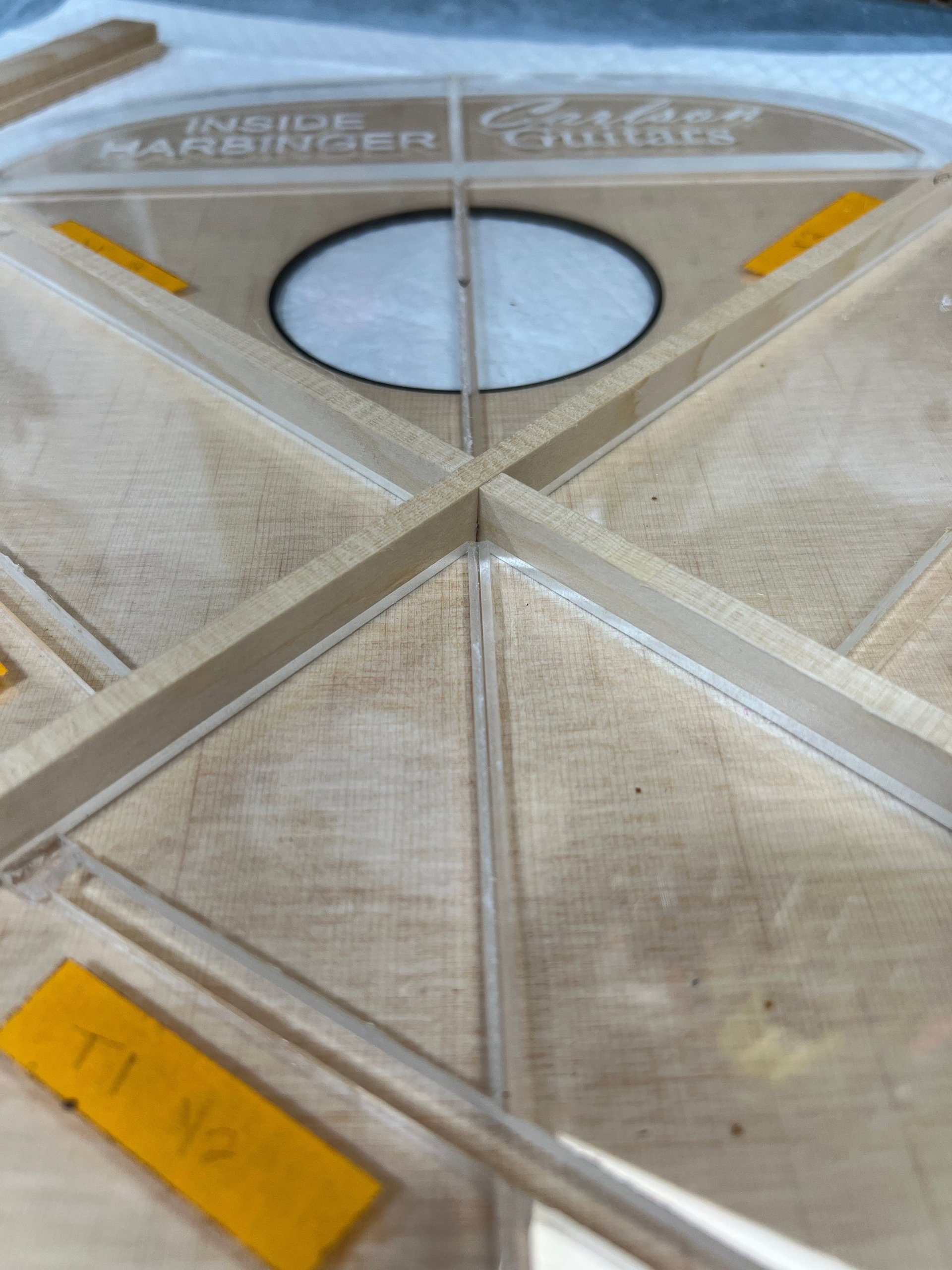
Modern tools are used where they provide measurable benefits in accuracy and repeatability. Certain operations demand precision that ensures consistency from one instrument to the next and allows critical dimensions to be established reliably.
This approach allows structural elements to begin from a known, repeatable foundation, reducing variables and ensuring that each instrument starts from a place of balance rather than correction.
Precision is not a shortcut, it is a way to remove uncertainty early in the process so attention can be focused where it matters most.
Handwork & Voicing
While precision tools establish consistency, the final character of each instrument is shaped by hand.
Critical operations such as voicing, shaping, and final refinement are performed through direct interaction with the materials. This is where responsiveness, balance, and feel are developed, not by formula, but by listening, experience, and careful adjustment.
No two pieces of wood respond exactly the same way. Handwork allows each guitar to be guided toward its own voice rather than forced into a predetermined outcome.
Bracing & Structural Approach
A modern bracing approach is used to support an active, responsive soundboard while maintaining control and long-term stability. The goal is to allow the top to move freely without relying on excessive stiffness or structural compensation.
This balance supports clarity, dynamic range, and blooming overtones, ensuring that the instrument remains musical and expressive across a wide range of playing styles.
Materials & Restraint
Materials are selected for how they contribute to the instrument as a whole, not for novelty or excess. Structural choices, aesthetic elements, and appointments are all considered through the same lens: do they serve the guitar?
Ornamentation is used sparingly and intentionally, allowing form, proportion, and sound to remain the focus. Every addition must earn its place
A Continuous Process
Tools and methods at Carlson Guitars are not static. They evolve alongside each instrument built, informed by experience, reflection, and refinement.
The goal is not to chase technique for its own sake, but to pursue greater clarity, consistency, and musicality over time, always in service of the instrument and the player.